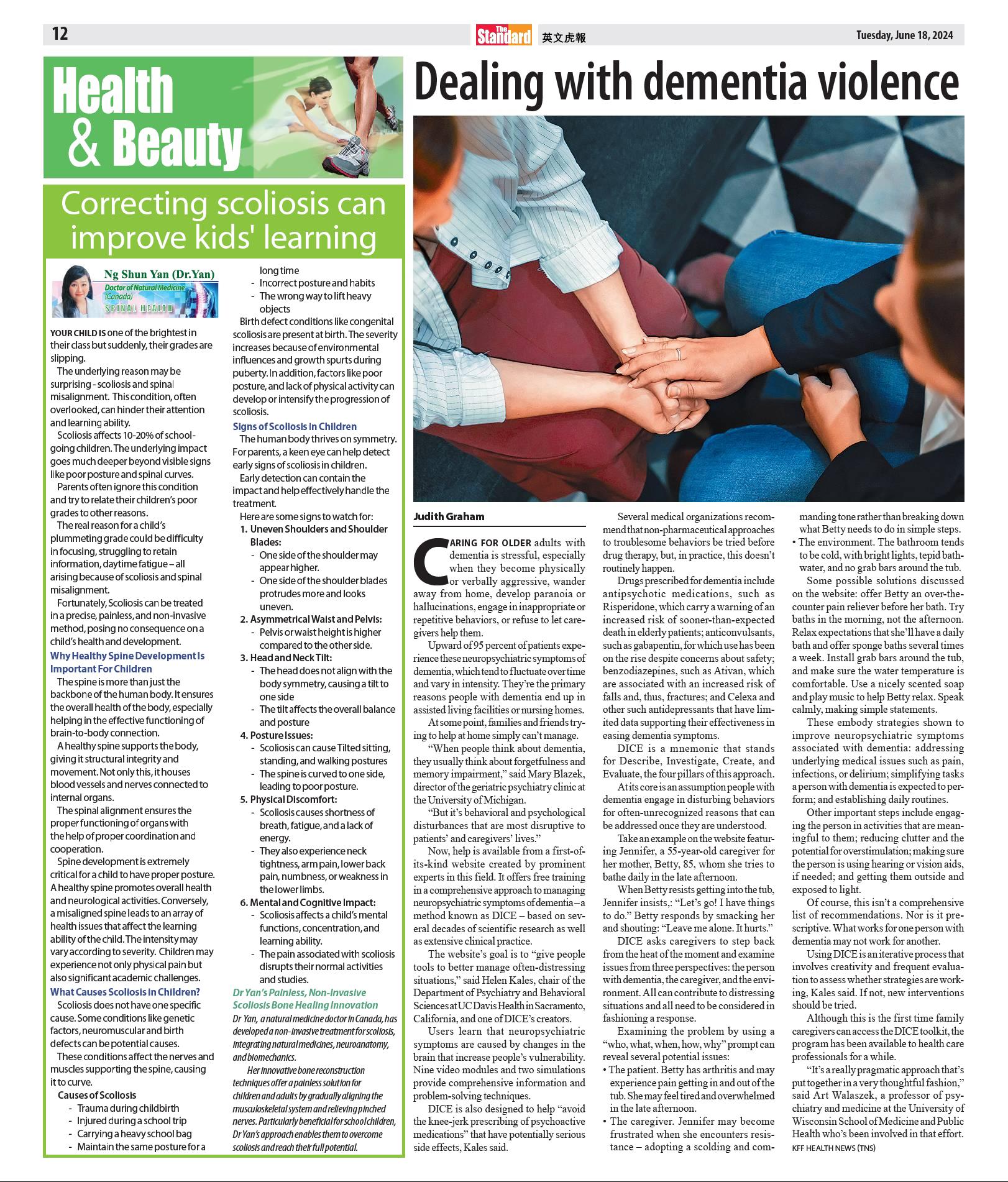
Your child is one of the brightest in their class but suddenly, their grades are slipping.
The underlying reason may be surprising - scoliosis and spinal misalignment. This condition, often overlooked, can hinder their attention and learning ability.
Scoliosis affects 10-20% of school-going children. The underlying impact goes much deeper beyond visible signs like poor posture and spinal curves.
Parents often ignore this condition and try to relate their children's poor grades to other reasons.
The real reason for a child's plummeting grade could be difficulty in focusing, struggling to retain information, daytime fatigue - all arising because of scoliosis and spinal misalignment.
Fortunately, Scoliosis can be treated in a precise, painless, and non-invasive method, posing no consequence on a child's health and development.
Why Healthy Spine Development Is Important For Children
The spine is more than just the backbone of the human body. It ensures the overall health of the body, especially helping in the effective functioning of brain-to-body connection.
A healthy spine supports the body, giving it structural integrity and movement. Not only this, it houses blood vessels and nerves connected to internal organs.
The spinal alignment ensures the proper functioning of organs with the help of proper coordination and cooperation.
Spine development is extremely critical for a child to have proper posture. A healthy spine promotes overall health and neurological activities. Conversely, a misaligned spine leads to an array of health issues that affect the learning ability of the child. The intensity may vary according to severity. Children may experience not only physical pain but also significant academic challenges.
What Causes Scoliosis in Children?
Scoliosis does not have one specific cause. Some conditions like genetic factors, neuromuscular and birth defects can be potential causes.
These conditions affect the nerves and muscles supporting the spine, causing it to curve.
Causes of Scoliosis
- Trauma during childbirth
- Injured during a school trip
- Carrying a heavy school bag
- Maintain the same posture for a long time
- Incorrect posture and habits
- The wrong way to lift heavy objects
Birth defect conditions like congenital scoliosis are present at birth. The severity increases because of environmental influences and growth spurts during puberty. In addition, factors like poor posture, and lack of physical activity can develop or intensify the progression of scoliosis.
Signs of Scoliosis in Children
The human body thrives on symmetry. For parents, a keen eye can help detect early signs of scoliosis in children.
Early detection can contain the impact and help effectively handle the treatment.
Here are some signs to watch for:
1. Uneven Shoulders and Shoulder Blades:
- One side of the shoulder may appear higher.
- One side of the shoulder blades protrudes more and looks uneven.
2. Asymmetrical Waist and Pelvis:
- Pelvis or waist height is higher compared to the other side.
3. Head and Neck Tilt:
- The head does not align with the body symmetry, causing a tilt to one side
- The tilt affects the overall balance and posture
4. Posture Issues:
- Scoliosis can cause Tilted sitting, standing, and walking postures
- The spine is curved to one side, leading to poor posture.
5. Physical Discomfort:
- Scoliosis causes shortness of breath, fatigue, and a lack of energy.
- They also experience neck tightness, arm pain, lower back pain, numbness, or weakness in the lower limbs.
6. Mental and Cognitive Impact:
- Scoliosis affects a child's mental functions, concentration, and learning ability.
- The pain associated with scoliosis disrupts their normal activities and studies.
Dr Yan's Painless, Non-Invasive Scoliosis Bone Healing Innovation
Dr Yan, a natural medicine doctor in Canada, has developed a non-invasive treatment for scoliosis, integrating natural medicines, neuroanatomy, and biomechanics.
Her innovative bone reconstruction techniques offer a painless solution for children and adults by gradually aligning the musculoskeletal system and relieving pinched nerves. Particularly beneficial for school children, Dr Yan's approach enables them to overcome scoliosis and reach their full potential.
Source URL : Correcting scoliosis can improve kids' learning | Spinal Health | Ng Shun-yan (Dr. Yan) | The Standard
https://www.thestandard.com.hk/opinion/article/1967/
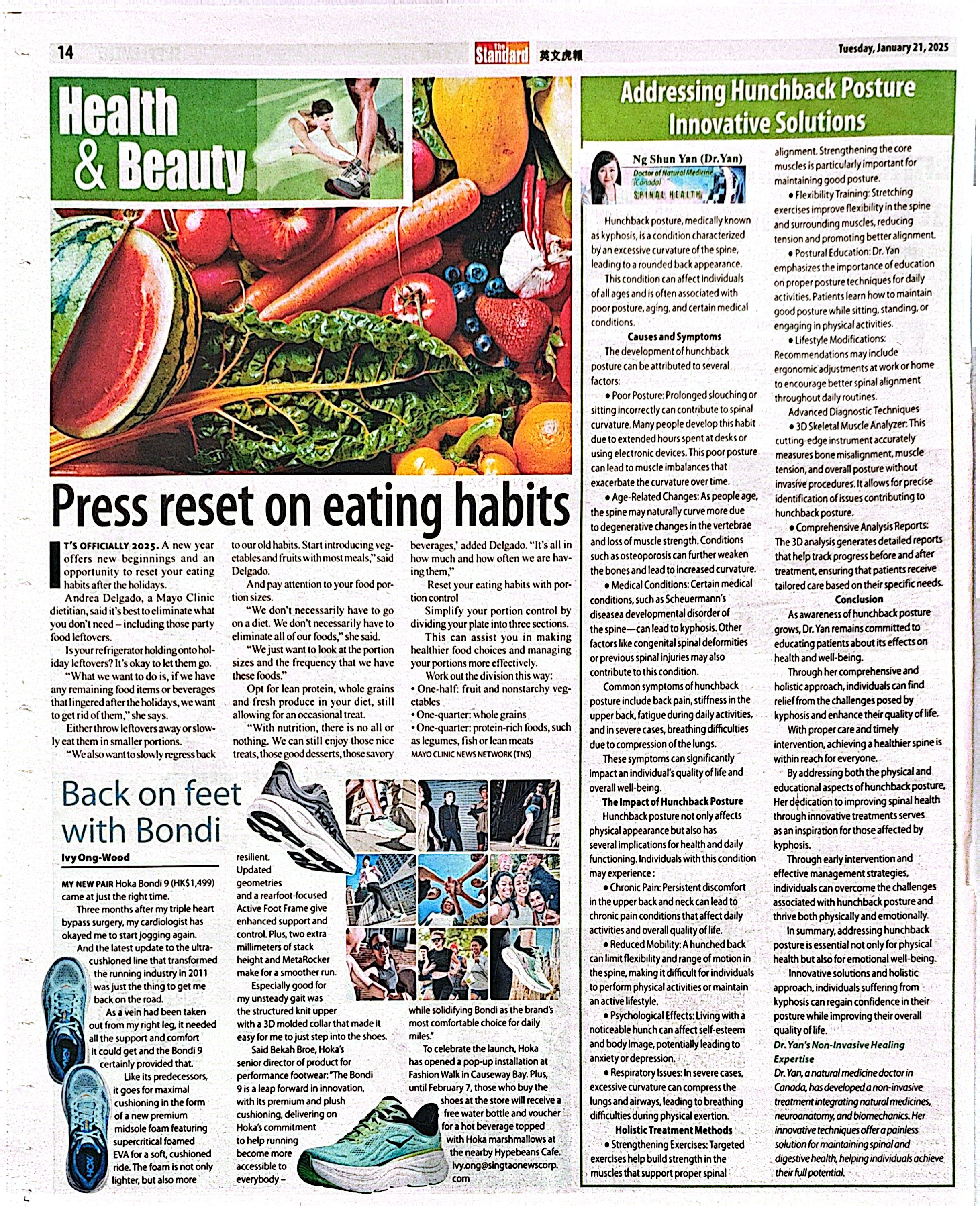
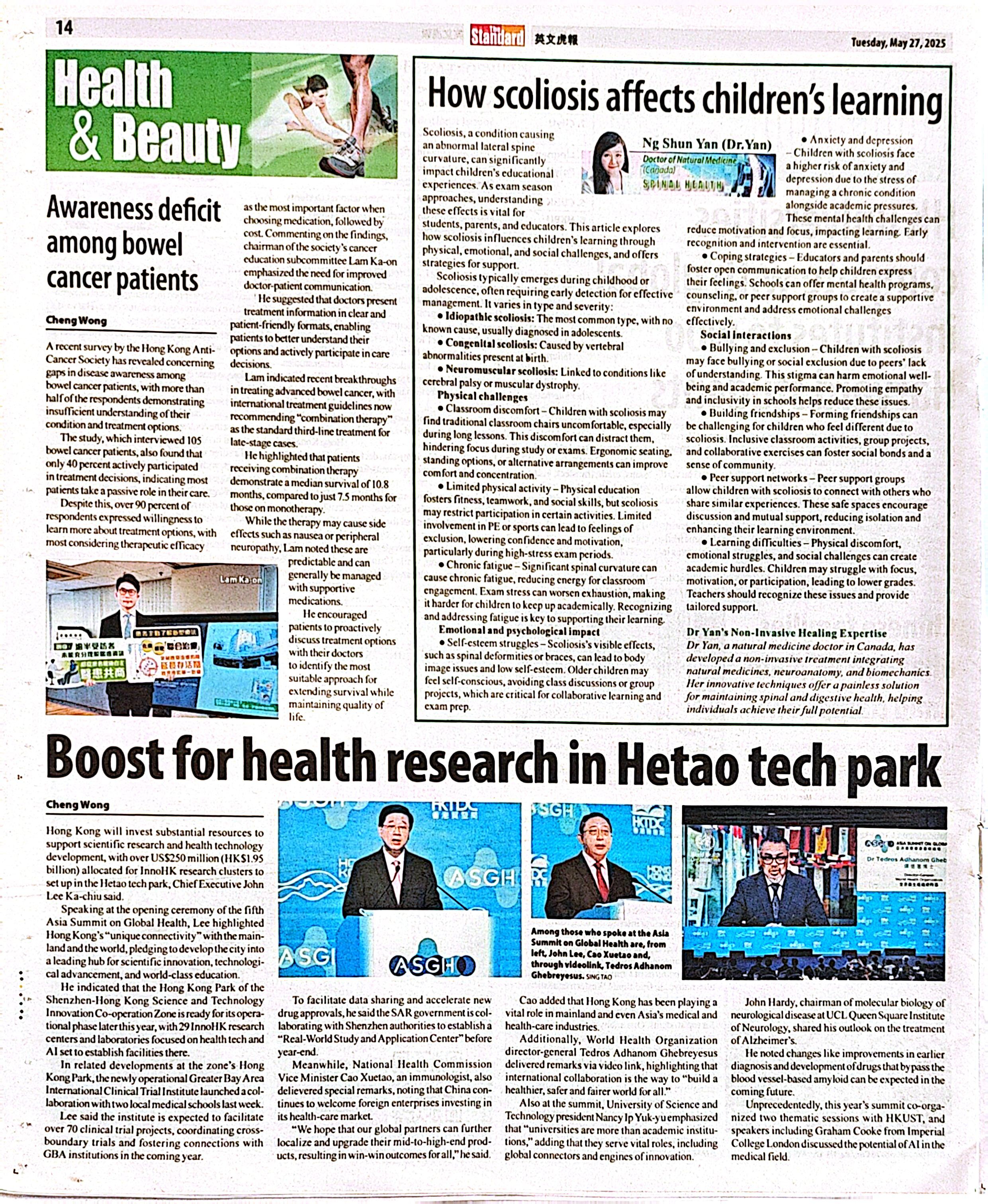
Scoliosis, a condition causing an abnormal lateral spine curvature, can significantly impact children’s educational experiences. As exam season approaches, understanding these effects is vital for students, parents, and educators. This article explores how scoliosis influences children’s learning through physical, emotional, and social challenges, and offers strategies for support.
Scoliosis typically emerges during childhood or adolescence, often requiring early detection for effective management. It varies in type and severity:
Idiopathic scoliosis: The most common type, with no known cause, usually diagnosed in adolescents.
Congenital scoliosis: Caused by vertebral abnormalities present at birth.
Neuromuscular scoliosis: Linked to conditions like cerebral palsy or muscular dystrophy.
Physical challenges
Classroom discomfort – Children with scoliosis may find traditional classroom chairs uncomfortable, especially during long lessons. This discomfort can distract them, hindering focus during study or exams. Ergonomic seating, standing options, or alternative arrangements can improve comfort and concentration.
Limited physical activity – Physical education fosters fitness, teamwork, and social skills, but scoliosis may restrict participation in certain activities. Limited involvement in PE or sports can lead to feelings of exclusion, lowering confidence and motivation, particularly during high-stress exam periods.
Chronic fatigue – Significant spinal curvature can cause chronic fatigue, reducing energy for classroom engagement. Exam stress can worsen exhaustion, making it harder for children to keep up academically. Recognizing and addressing fatigue is key to supporting their learning.
Emotional and psychological impact
Self-esteem struggles – Scoliosis’s visible effects, such as spinal deformities or braces, can lead to body image issues and low self-esteem. Older children may feel self-conscious, avoiding class discussions or group projects, which are critical for collaborative learning and exam prep.
Anxiety and depression – Children with scoliosis face a higher risk of anxiety and depression due to the stress of managing a chronic condition alongside academic pressures. These mental health challenges can reduce motivation and focus, impacting learning. Early recognition and intervention are essential.
Coping strategies – Educators and parents should foster open communication to help children express their feelings. Schools can offer mental health programs, counseling, or peer support groups to create a supportive environment and address emotional challenges effectively.
Social interactions
Bullying and exclusion – Children with scoliosis may face bullying or social exclusion due to peers’ lack of understanding. This stigma can harm emotional well-being and academic performance. Promoting empathy and inclusivity in schools helps reduce these issues.
Building friendships – Forming friendships can be challenging for children who feel different due to scoliosis. Inclusive classroom activities, group projects, and collaborative exercises can foster social bonds and a sense of community.
Peer support networks – Peer support groups allow children with scoliosis to connect with others who share similar experiences. These safe spaces encourage discussion and mutual support, reducing isolation and enhancing their learning environment.
Learning difficulties – Physical discomfort, emotional struggles, and social challenges can create academic hurdles. Children may struggle with focus, motivation, or participation, leading to lower grades. Teachers should recognize these issues and provide tailored support.
Dr Yan’s Non-Invasive Healing Expertise
Dr Yan, a natural medicine doctor in Canada, has developed a non-invasive treatment integrating natural medicines, neuroanatomy, and biomechanics. Her innovative techniques offer a painless solution for maintaining spinal and digestive health, helping individuals achieve their full potential.
Source URL : How scoliosis affects children’s learning | Spinal Health | Ng Shun-yan (Dr. Yan) | The Standard
https://www.thestandard.com.hk/opinion/article/303329/